
This easy homemade pasta dough gives you smooth, silky pasta every time using just flour and eggs. After years of testing ratios, kneading techniques and rolling methods, this is the reliable dough I use for all my pasta recipes, from pappardelle to ravioli. With this simple, step-by-step guide, you’ll be making perfect fresh pasta at home with total confidence.

Why this pasta dough recipe works
Foolproof ratios with zero guesswork
Eggs vary so much in size, so I give you the weight of the eggs, it makes this dough completely foolproof and perfectly hydrated every single time.
Flexible method, by hand or in a food processor
Bring the dough together by hand on the bench or pulse it in a food processor if you want a mess-free, quicker start.
Works for multiple pasta shapes
Use this dough for silky pappardelle, tagliatelle, or homemade ravioli.
Years of testing
After countless batches testing flours, hydration levels and kneading techniques, this is the reliable, consistent dough I use for every pasta shape on my site.

I’m so excited to share everything I’ve learned after years of testing, kneading and rolling pasta dough.
Once you understand the basics, this recipe becomes second nature. I’ll walk you through exactly how to bring the dough together and roll it into smooth, silky sheets, whether you use a Marcato, a KitchenAid attachment, or a rolling pin.

Jump to:
Main ingredients
Flour - I use a combination of two types of flour, '00' flour and semola rimacinata, which is a very finely milled semolina flour. You can use all 00 flour, or substitute all-purpose flour if needed.
Room Temperature Eggs - Eggs vary so much in size, so I always give you a total egg weight rather than a number of eggs. Weighing the eggs makes this dough completely foolproof and ensures perfect hydration every time. Just place a bowl on your scales, crack in the eggs, and stop when you reach the right weight.
Equipment needed
- Scales - For the most accurate results, always weigh both the flour and the eggs. This removes all guesswork and ensures perfect dough hydration every time.
- Pasta Machine - A Marcato or KitchenAid roller makes it easy to get thin, even pasta sheets. Hand-rolling works too, it’s just more effort.
- Wooden Cutting Board - Ideal for kneading and shaping. Wood grips the dough slightly, making rolling much easier than a slippery countertop.
- Plastic Wrap - Fresh pasta dough dries out fast. Keep it tightly wrapped at all times so it stays smooth and easy to roll.
- Sharp Knife or Pasta Wheel - Use a knife, pizza cutter or fluted wheel to trim sheets or cut shapes like pappardelle.
My biggest tip!
Purists might not like this, but my biggest tip for making homemade pasta is to bring the dough together in a food processor! It’s cleaner, quicker, and so much easier.
Simply add your flour and eggs, pulse until the mixture looks like fine breadcrumbs, then take the blade out and use your hands to squeeze everything into a rough ball. Bring it out onto the bench and knead as usual.
The result is exactly the same as doing it by hand, just faster and far less messy. Once you’ve tried it this way, you’ll never look back!

Would you like to save this?
How to make pasta dough
The full recipe, exact measurements, and video are in the recipe card below. These step-by-step photos are just a visual guide.
You can make this dough by hand, in a mixing bowl, or in a food processor. All methods give the same silky, smooth result. In the photos I’m showing the traditional bench-top method, but choose whichever option works best for you.
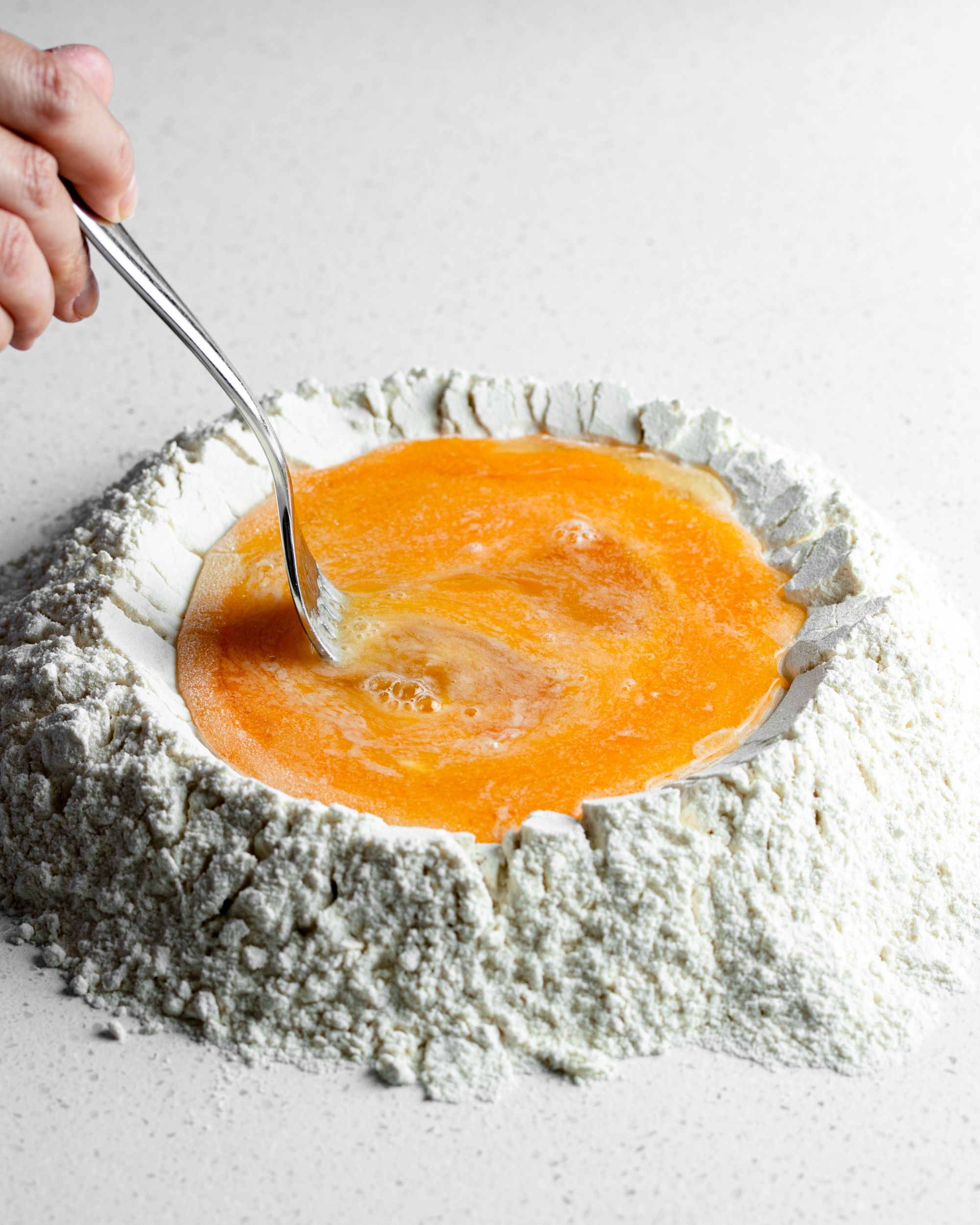
- Tip your flour into a mound on the bench and make a well to tip your mixed eggs into.
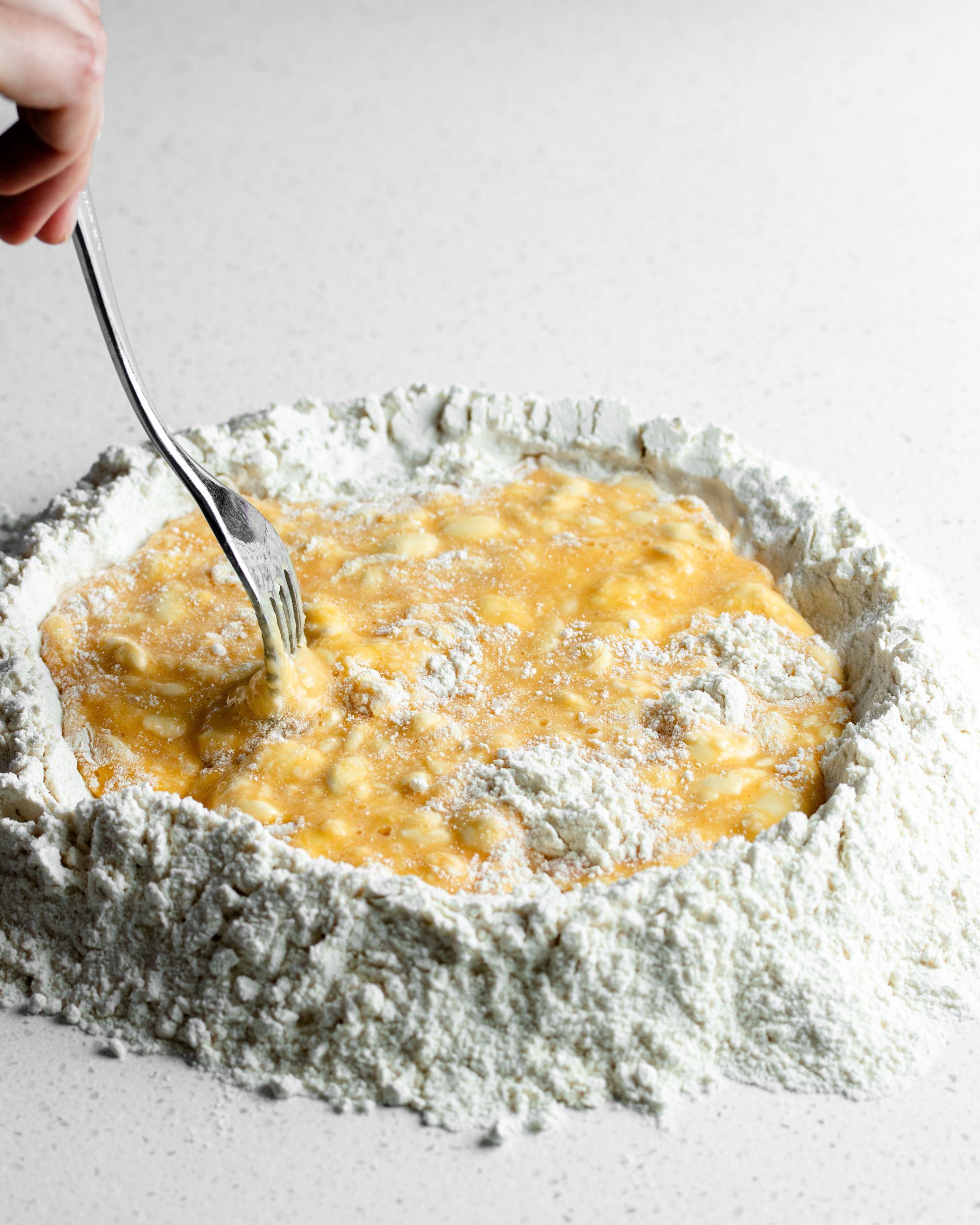
3. Keep mixing, incorporating the flour until the middle is thick and a scrambled egg consistency.
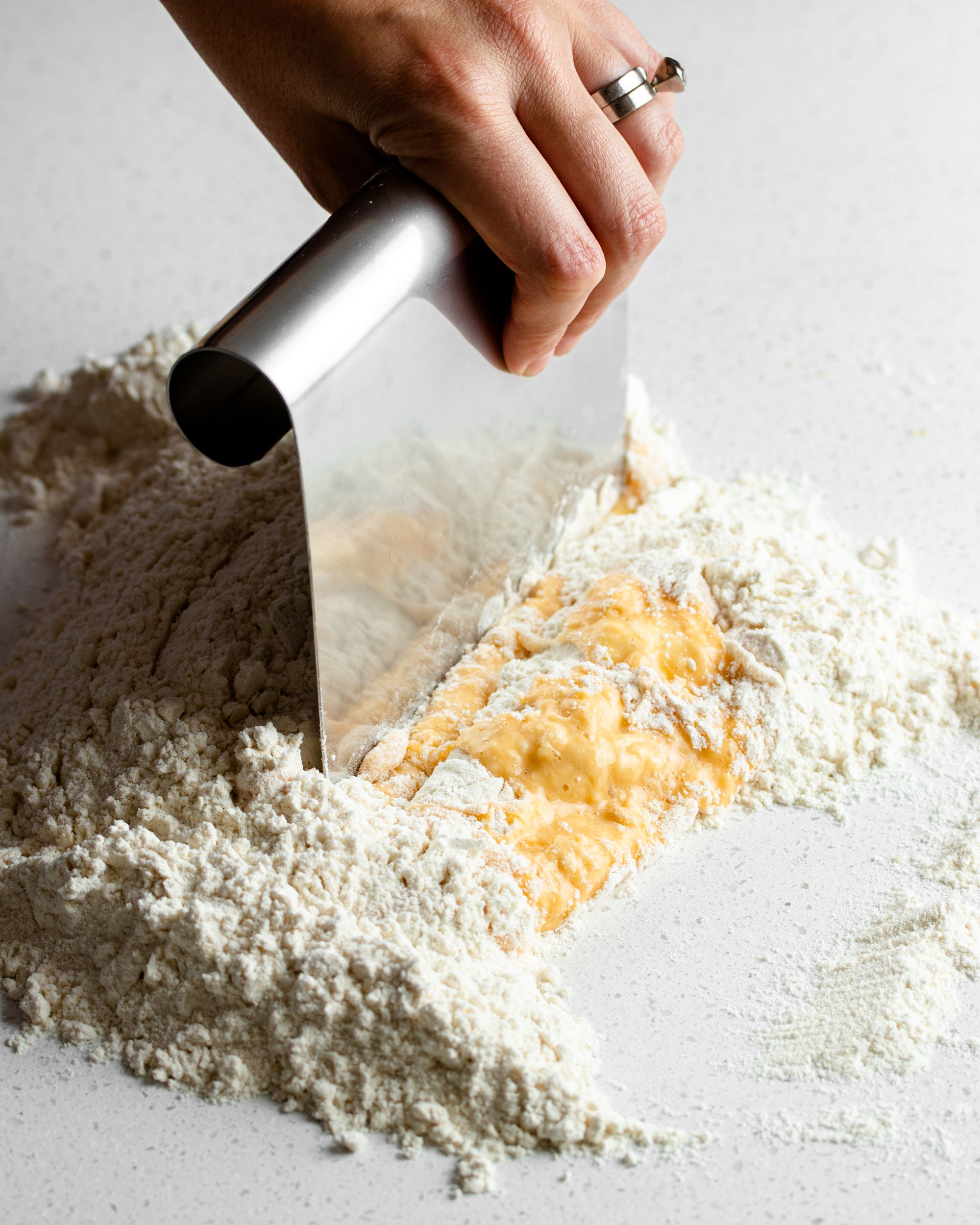
5. It doesn't matter how you do this and it will be a mess but it comes together I promise!
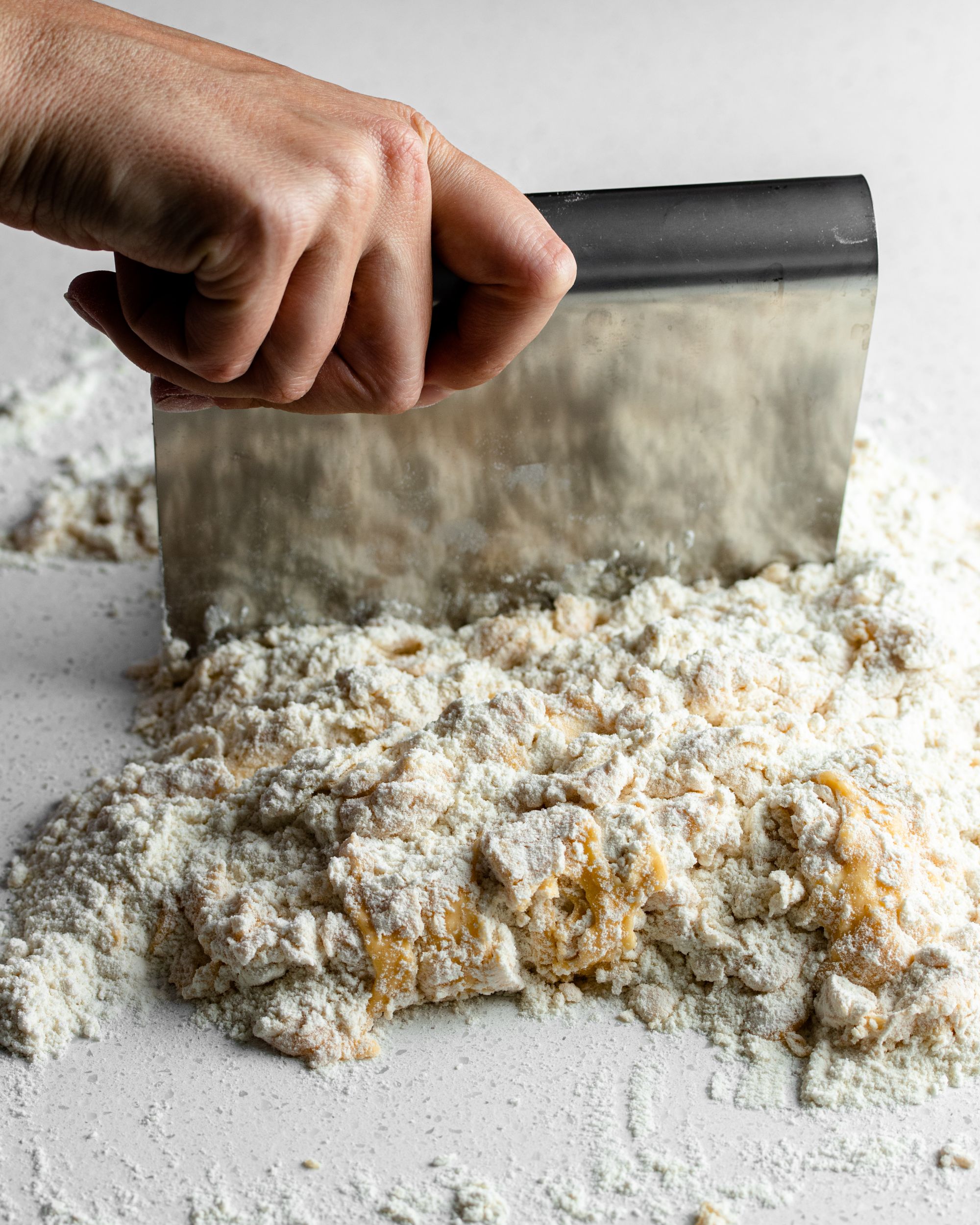
6. With the scraper or fork use a cutting motion up and down to try and get everything really evenly incorporated.

8. Bring the mixture together with your hands, squeezing it into a rough ball.
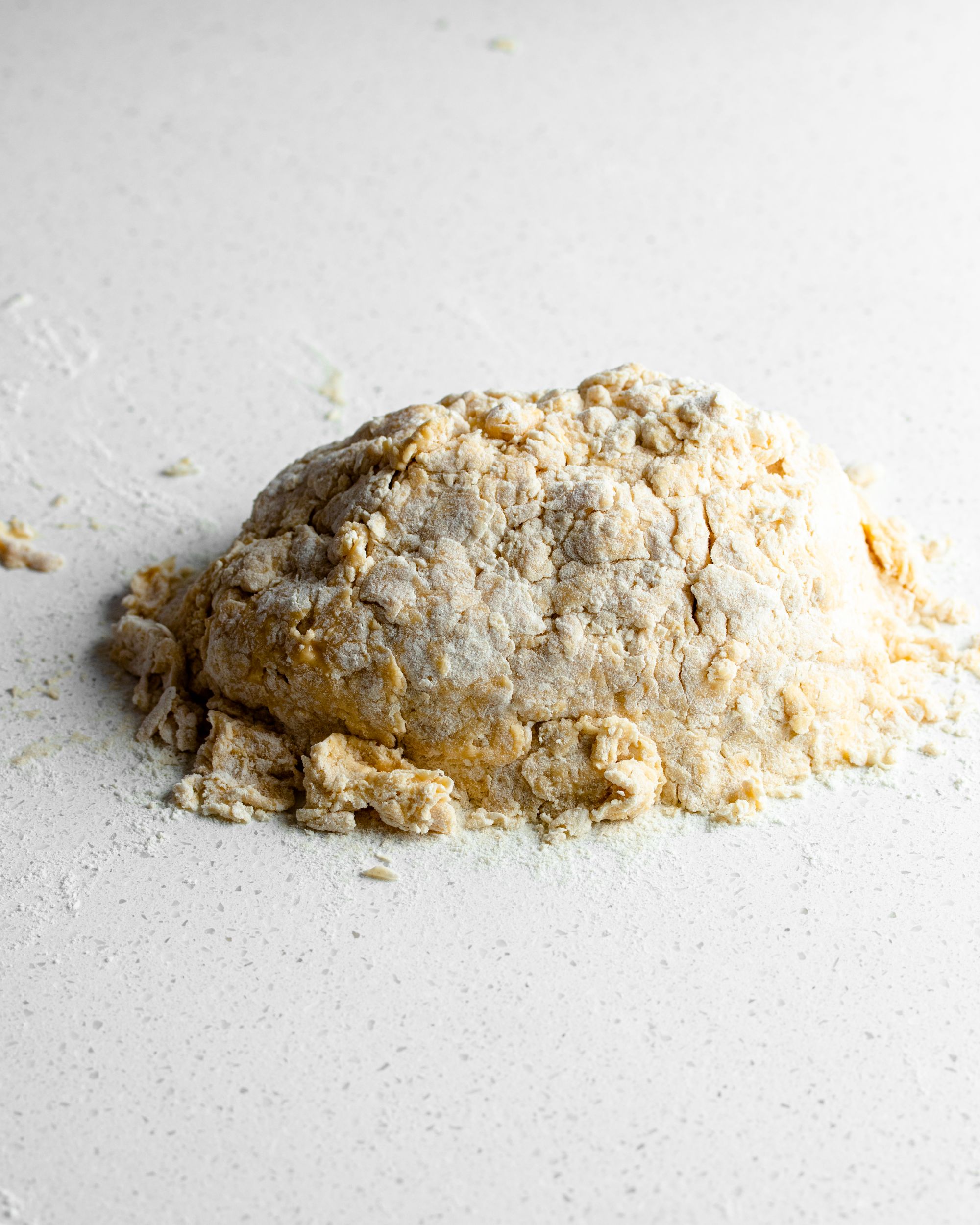
9. Squeeze and squeeze until it forms a ball. Again, it will come together, don't stress!

10. Knead for 3 - 4 minutes quite vigorously.

11. When it looks dimpled like this wrap it up tightly in plastic wrap and rest for 10 minutes.
After the first rest

- Continue kneading for 3 minutes or so until you have a nice smooth dough.
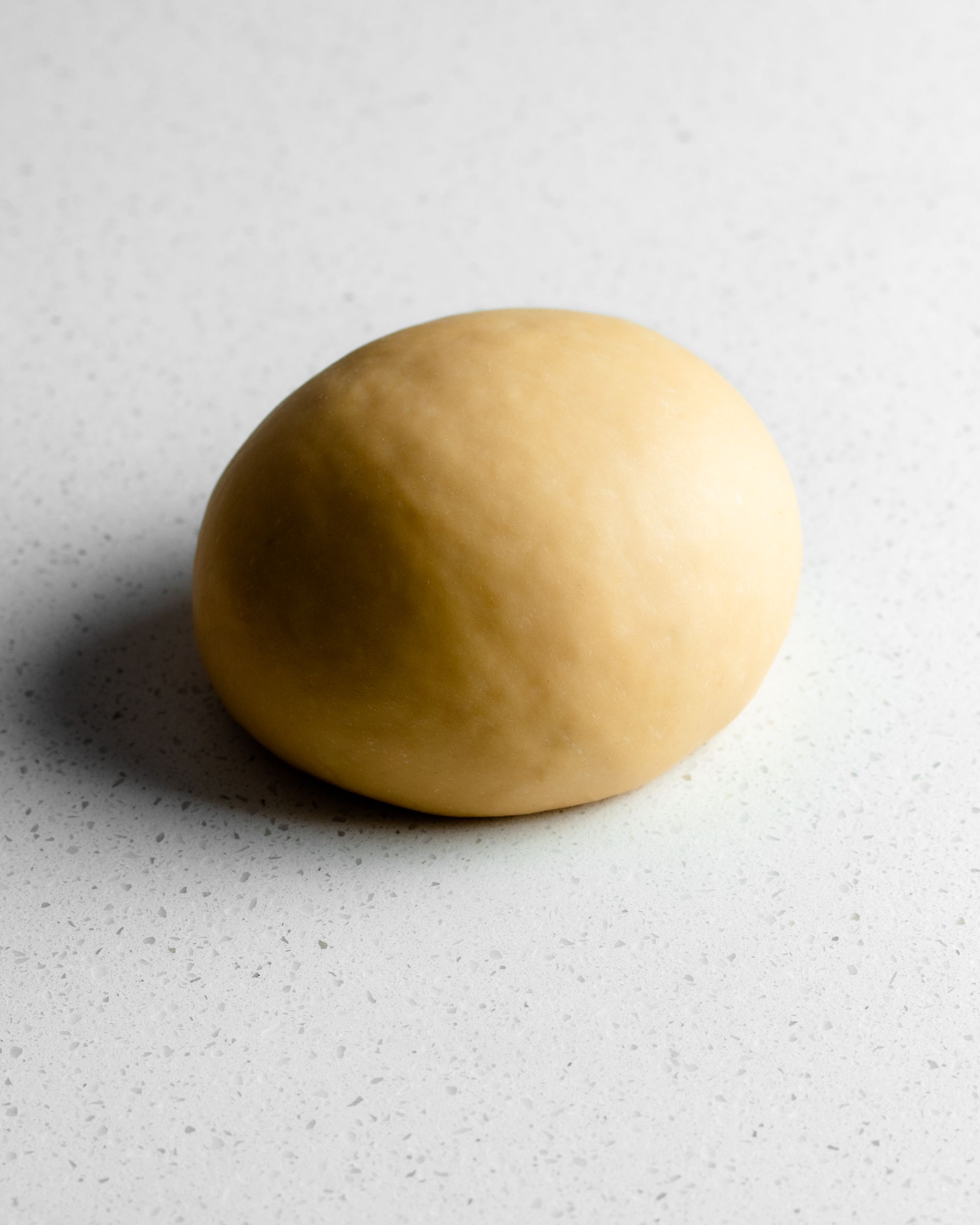
2. Wrap up tightly again and rest for 30 minutes or up to an hour.
Why the double rest?
The first rest lets the flour fully hydrate, so the dough becomes cohesive and easier to knead.
The second rest relaxes the gluten, giving you a smoother, more elastic dough that rolls out beautifully with far less effort.
How to roll pasta dough
Rolling pasta dough is simple once you know the rhythm. Work with a quarter of the dough at a time (or even ⅙th) and keep the rest tightly wrapped so it doesn’t dry out. Smaller pieces are easier to control and help you achieve an even thickness.

- Press the quarter piece down flat with your hand or a rolling pin and dust with a little flour.

2. Roll it through the widest setting.

3. You'll have a long oval, so take the rounded ends and fold them into the middle to create a rectangle.

4. Roll it back through the roller at the widest setting and then the next setting (that is 1 and 2 on a marcato or kitchen aid)

5. Fold the rectangle in half and dust with a little flour.

6. Take it back through the widest setting.

7. Now roll it through each setting 1, 2, 3 and 4.

8. After setting 4 fold the sheet into three.

9. You might need to trim the edges if it gets too wide for the roller.

10. Now take it back to setting 2 and go through them all again stopping at 6 or whatever thickness you like.

11. This is what gets extra smooth perfect sheets, folding and re-rolling is the key!

12. You'll now have a perfect sheet to use however you wish!
You should end up with a smooth, silky sheet of pasta. Remember that there’s no single “right” way to roll pasta, every machine and every pasta maker works a little differently. Start on the widest setting and work your way thinner, and you’ll get there every time. Most of all, enjoy the process. Fresh pasta should be fun to make and even better to eat.
What is semolina flour (and the difference between semolina and semola)
Semolina is a type of flour made from durum wheat, a hard variety of wheat that gives pasta its signature bite and golden color.
The finer version of semolina is called semola rimacinata (or just semola). It’s milled extra fine, which makes it perfect for mixing into homemade pasta dough for a chewy, al dente texture. It's also used to make a Semolina Pasta Dough for hand rolled shapes.
The coarser grind, labelled semolina, is made from the same wheat but used differently, it’s ideal for dusting trays or preventing fresh pasta from sticking.
In short: semola goes into the dough, semolina goes on the tray. Both are fantastic to have on hand when making pasta from scratch.
What can I make with it?
So many things! If you’re new to making pasta at home, start simple by cutting your pasta sheets into wide ribbons for homemade pappardelle. Don't miss my pasta shapes and guides section for so many different shapes to make.
Most pasta machines include cutter attachments for fettuccine or spaghetti, which are great next steps. Just remember that fresh pasta cooks quickly, narrow shapes like these only need about two minutes in boiling water.
Once you’re feeling confident, try moving on to filled pasta. My homemade ravioli guide walks you through every step, and if you’re after something slightly easier, triangoli with a ricotta filling is another beautiful place to start.

Common pasta dough questions
I use a combination of '00' and fine semolina flour. The semolina gives a bit of bite and structure. You could use all '00' or all purpose flour too.
Yes! Traditional Italian pasta uses both egg doughs and flour and water doughs. The latter is usually made with semola rimacinata and is perfect for hand-rolled shapes like orecchiette or gnocchi sardi. For the simplest version, try my hand-rolled pici pasta, just plain flour (or '00') and water!
It depends on the shape and thickness. Thin pasta like pappardelle, fettuccine, or spaghetti needs around 2 minutes in boiling water, while filled pasta such as ravioli or cappelletti take 4–5 minutes. Always taste a piece before draining, fresh pasta cooks quickly!
I don’t recommend freezing the raw dough, it can change texture when thawed. Instead, shape the pasta first and freeze that. Fresh pasta shapes freeze beautifully, just arrange them on a tray to freeze for 20-30 minutes, then transfer to a container or bag. Boil from frozen.
In an ideal world the dough rest period is only 30mins - 1 hour at the most. You could stretch this to 3 if you have to. You could prepare it earlier and refrigerate but it will get more elastic and harder to work with the longer you leave it. It always needs to be room temperature when rolled.
Yes! Put the flour and eggs into the food processor and pulse to combine into an even mixture. Squeeze the mixture together and then knead on a clean work surface as usual. You could also knead the dough in the bowl of a stand mixer with the dough hook attached.
Some pasta shapes to try


Did you make this recipe?
I would LOVE it if you could leave a review and star rating down below. Also please tag me on Instagram if you share a photo of the dish!

Recipe
How to Make Easy Homemade Pasta Dough
Would you like to save this?
Ingredients
- 400 grams '00' flour (please see notes on flour options below)
- 225 grams eggs (see notes on weighing below)
Instructions
- Please read all the information above plus step-by-step photos.
- Tip the flour out onto your bench. Create a well in the centre of the flour mound, I use the bottom of a bowl to do this so it is nice and firm.
- Tip the eggs into the well and start to whisk them with a fork, breaking up the yolks and gradually incorporating the flour from around the sides into the middle.
- Keep doing this until the mixture in the middle is thick enough that it won’t escape or run out – a scrambled egg consistency!
- Go in with a bench scraper and start to fold it all together, cutting the egg mixture into the flour in an up and down motion. You are just trying to get a really evenly incorporated shaggy mixture.
- Bring it all together into a mound with your hands. Knead the mixture for a few minutes until it comes together into a workable ball. It will – don’t fear! If it feels dry you can wet your hands and keep kneading.
- When it comes together and has a slightly dimpled surface wrap it in cling film and rest for 10 minutes. After 10 minutes knead for a further 3 - 4 minutes until you have a nice smooth dough ball. The double rest is key!
- Wrap tightly and rest for at least 30 mins but I prefer an hour.
- If you don't want to make a mess then mix in a food processor. Pulse the eggs and flour until evenly distributed (coarse breadcrumb texture) then take the blade out, squeeze into a ball and bring out onto the bench to knead as normal
Rolling
- Please check out my rolling guide in images above, it's easier to see in photos.


Sarah says
I have made pasta with this dough quite a few times, and the result is always perfect. I made tagliatelle, ravioli and agnolotti with it, and wanted to try something new yesterday so I made lasagna sheets - we loved it (and won‘t be able to buy lasagna sheets in a store ever again, the difference is huge!)
Best thing is, the recipe is really fool-proof. I did not have any experience making pasta before discovering your page, but the pasta came out perfect right from the beginning.
Emilie Pullar says
Hi Sarah, this comment makes me so happy! So glad you are loving making fresh pasta! 🙂
Liz says
I started with and got really comfortable with hand-rolled shapes using flour and water dough, but have only just started venturing into egg doughs. Having this process laid out so clearly has been such a big help! And knowing the flours are interchangeable is so helpful for when I'm in a pinch! I can't wait to experiment more with egg doughs!
Vidushi (@vidushieats) says
I have been making pasta from scratch for years and have tried numerous variations methods, but I recently found this recipe and thought it was an excellent, easy dough recipe. The double rest really is key!
Emilie Pullar says
Yay so glad it worked well for you! 🙂
RMN says
What a fabulous recipe! I’ve tried so many recipes but this was the first time I was able to produce such smooth, supple, beautiful sheets of pasta. So delicious! Your terrific instructions made it so easy and now I can happily make fresh pasta a part of my weekly repertoire!
Emilie Pullar says
This makes me SO happy! Thank you 🙂
Andrea says
Loved making this recipe! Such a great explanation of all the steps and my dough was smooth as silk and perfect! I felt like a total pro! Thanks so much for your gorgeous pasta inspiration Em- your page is truly a visual delight!
Emilie Pullar says
Yay so glad it worked for you so well!! 🙂
Ruby says
Loved this pasta dough recipe. I have tried a few others and my dough kept turning out dry and I would have to remember to leave flour out to get the right consistency. This recipe worked out perfectly. So soft and rolled out wonderfully. I can’t wait to try some other recipes of yours.
Emilie Pullar says
Hi Ruby, so glad it worked well for you! 🙂
Maja says
My first time making pasta, recipe was SO easy to follow and the videos/photos really helped! Will definitely make again, thank you!
Emilie Pullar says
Yay that is awesome, thank you! 🙂
Michelle says
Made this dough and it was lush!
Emilie Pullar says
Yay thank you Michelle! 🙂
Charline says
I had never tried making my own pasta because it always seemed too difficult but honestly, it was suuupeer easy! Wasn’t quite on point with the shape of my pasta but it tasted so good!!!
Emilie Pullar says
Hi Charline, so glad you had success with the dough recipe! Thanks so much for making it!
Laura says
Really easy and delicious, thanks so much for this recipe ??
Emilie Pullar says
Yay so glad you found it easy! 🙂
Raeoni says
I picked up making pasta as a lockdown hobby and was never happy with the end result of the many inconsistencies I experienced with most recipes.
I now swear by weighing the eggs and getting this ratio right after seeing this on Emilie’s Instagram. Following this formula results in a hardy but workable dough that only gets silkier with each pass through the rollers. V happy to have found this!
Emilie Pullar says
Hi Raeoni thanks for such a lovely comment! People think weighing the eggs is too hard basket but when you get a perfect dough every time it's so worth it! 🙂
Jane Jess says
We just purchased a pasta maker as we had a lesson in Italy and had to try it. Used your recipe and the noodles were amazing!
Two questions for you. Can you make the dough and freeze and then roll out. And secondly can you make the noodles and freeze?
I’m looking ahead to a dinner party for ten and feel like it would be nice to have either dough or noodles ready ahead of time.
I love your site and it will be a regular go to for recipes and tips!
Thank you!
Emilie Pullar says
Hi Jane! I would personally never freeze dough but definitely freeze the finished pasta shapes! I freeze the shapes open on a tray for about 30 mins then transfer to a snaplock bag or container. Feel free to DM me anytime on insta with questions 🙂
Scott says
If you're letting the dough rest for 2 or 3 hours before making should you refrigerate or leave out?
Emilie Pullar says
No leave it out, 3 hours would be the maxiumum I would let it sit out 🙂
Harriet says
Have used this a few times now and it’s the best pasta recipe! Always get a beautiful smooth dough..double rest is key!
Emilie Pullar says
Thank you so much! It really is a game changer I can't believe I ever made dough with one rest!
Will says
Super easy and super tasty! My 7 year old daughter and I had so much fun making it!
Emilie Pullar says
Hi Will, so glad you loved making it! A great project to make with your daughter 🙂
Sophie says
This is my go to pasta recipe now. So easy and therapeutic! Makes a really fantastic, smooth dough every time.
Emilie Pullar says
Yay that's so great, thank you!! 🙂
Leona says
I've been using this recipe as well as some of Emilie's tips and my pasta dough always comes out so luxuriously silky. It's been such a game changer