
Semolina pasta dough is a simple two ingredient dough made with just semolina flour and water. Because it’s egg free, it’s naturally vegan and an ideal place to start if you’re new to making pasta. There’s no pasta machine required, this dough is designed for rolling, shaping, and cutting by hand into rustic shapes. I often recommend starting with easy shapes like gnocchi sardi, which are forgiving, fun to make, and a great introduction to hand rolled pasta. The finished pasta has a satisfying chew and holds onto sauce beautifully.


Hello! This guide on semolina pasta dough ecplains why it works, how to handle it, and why it’s such a great place to start if you’re new to making pasta. If you’ve ever made an egg pasta dough before, you’ll find this one even more approachable. Semolina dough is one of the easiest and most forgiving styles of pasta making.
Unlike egg dough, semolina dough doesn’t require a pasta roller. All of the shapes are rolled and formed by hand, making the process more relaxed and accessible. The finished pasta has a satisfyingly chewy texture that’s hard to beat. Orecchiette is my favorite shape to make with this dough, as those little ears are perfect for catching sauce, and it’s a great example of how versatile and rewarding hand rolled pasta can be.

What is semolina?
Simple! It is a flour milled from a kind of wheat called durum wheat. It is just a different type of wheat and is often classed as a 'hard wheat'. The '00' flours or even plain flour is more of a 'soft wheat'.
Basically what that means is that shapes made out of a semolina pasta dough will have more of a bite, they often have, in my opinion, a really addictive and delicious chewy factor. When you add semolina into an egg pasta dough it helps to add structure and an al dente bite. That is why I often mix it into '00' flour when making my easy homemade pasta dough.
The difference between Semolina and Semola
This is something that confuses a lot of people and is VERY important! Both are made from exactly the same wheat but are milled differently. Semola is what we call really fine semolina and is the flour you need to use when making this pasta dough, it is also the flour that goes into an egg dough along with '00'.
It will most often labeled semola rimacinata. What is labeled semolina is a much coarser flour but it also used in pasta making, just not in the dough. When making any kind of pasta having the courser semolina on hand is very handy for dusting trays and preventing the pasta from sticking.
What shapes can you make with a semolina pasta dough?
So many! I need to get some more guides written up but until then the first shape you must make is my hand rolled gnocchi sardi pasta. It is hands down the easiest shape to make and the shape I always suggest for people who haven't made pasta before. My favourite pasta shape in the world (HUGE call, I know) is orecchiette, which you can also make with this dough, just with slightly less water.


How to make semolina pasta dough
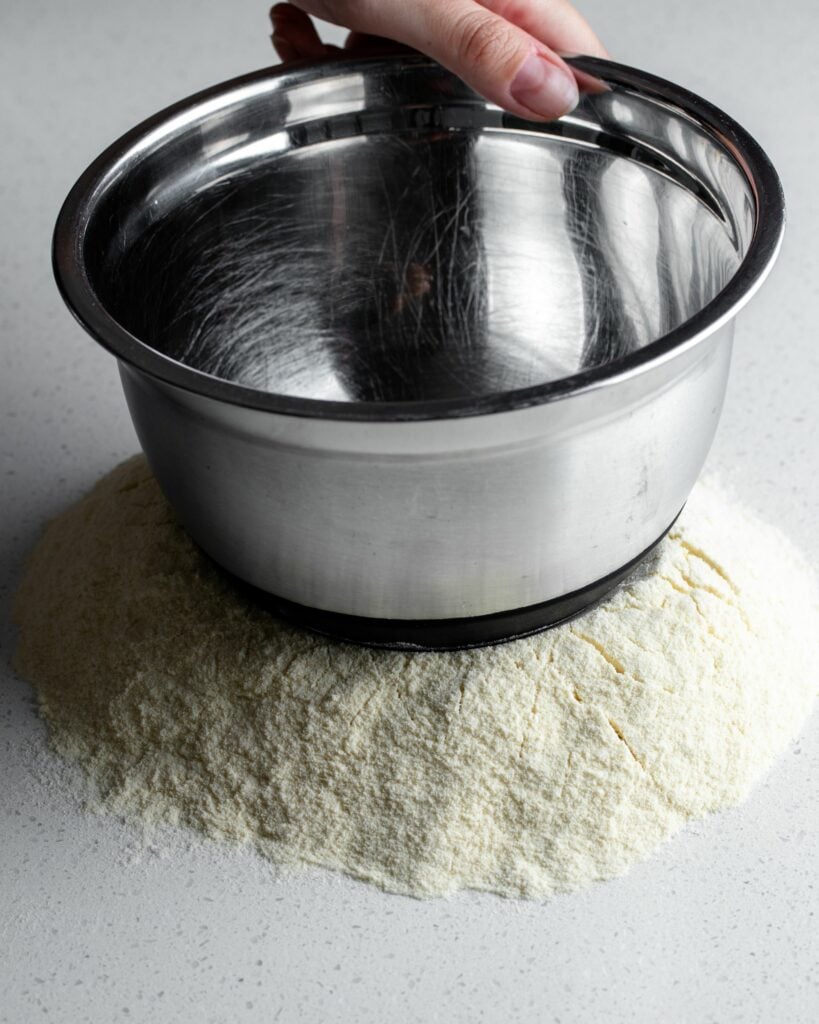
- Weigh the flour and make a pile on your bench, I like to use the bottom of a bowl to make a firm indent in the flour to pour the water into.
- Pour your water into the middle then use a fork to start mixing the flour in, bringing small bits at a time from the outside into the liquid. It will thicken quite quickly and when it gets really thick bring all the remaining flour into the middle with your hands or a bench scraper.
- This is where I use the dough scraper to cut the dough up and down and side to side to incorporate the flour and water together into a shaggy dough.
Would you like to save this?


- Once you have an even shaggy dough bring it together into a ball, it will seem like a right mess at this point but I promise it will all come together!
- Squeeze the ball together and start to knead it, it needs a fair bit of elbow grease here. Knead for 3 - 4 minutes until it has a dimpled texture, then wrap it in cling film and rest for 10 minutes.
- After 10 minutes continue kneading for 3 - 4 minutes until you have a lovely smooth ball of dough. Wrap tightly and rest at room temperature for at least 30 minutes but preferably an hour or up to three.


Let's talk hydration!
Have you ever heard people talking about the hydration levels in dough? Be it pasta or bread making? It sounds so technical but it's actually really simple, I promise! In most hand rolled pasta shapes, made with this dough the hydration is 50%.
That means that if you use 450g of flour, you would use 50% of that weight in water, so 225g. Easy right?! If you used 400g of flour, you'd use 200g and so on and so on. In my easy homemade pasta dough I use a hydration of about 56%.
An exception to the 50% hydration for this dough is if you are making my homemade orecchiette. It works better with a slightly lower hydration so I do about 46%. That means for 400g flour I would use about 185g water.

Need some sauce inspiration?
The thing I love about semolina pasta dough shapes is they truly go with any sauce. Throw out the rule book and do whatever you like! If you want something simple check out my 10 minute brown butter for pasta or my easy roast tomato pasta sauce.
If you are making gnocchi sardi check out my cacio e pepe with olives and basil, it's pretty much heaven in a bowl! For an orecchiette idea look no further than my creamy roast garlic and lemon pasta sauce.
Common questions
It's just the traditional way! It's always a flour and water dough. Because the shapes are mostlt hand formed the semolina gives them strength so they hold their shape. My easy homemade pasta dough is a regular egg and flour dough.
It absolutely is!
I don't ever suggest freezing the ball of dough but you can absolutely freeze the finished shapes. Freeze them open on a tray for 20 mins or until hard then transfer to a freezer bag or container. Cook from frozen.
Yes, I do it all the time! It's so much quicker and easier. Put your weighed ingredients into a food processor and pulse to combine. When it is an even mixture, take the blade out then squeeze it into a ball as best you can before bringing out onto the bench to knead.
Did you make this recipe?
I would LOVE it if you could leave a review and star rating down below. Also please tag me on Instagram if you share a photo of the dish!

Recipe

Semolina pasta dough
Would you like to save this?
Ingredients
- 450 g semolina rimacinata flour
- 225 g warm water
Instructions
- Make sure you check out all the photos above to see the process!
- Pour your flour out onto your bench and use the bottom of a bowl to make a well in the middle. Pour the water into the middle then use a fork to start whisking, slowly and carefully incorporating the flour into the middle.
- When the centre liquid gets really thick, abandon the fork and go straight in with your hands or alternatively use a bench scraper to start mixing it all together until you end up with an even shaggy mixture.
- You can also bring it together in a bowl if you want an easier clean up!
- Bring it together into a ball and start to knead, this will be messy but it will come together I promise!
- Knead quite vigorously for a few minutes until it comes together and has a dimpled texture. Wrap tightly and leave for 10 mins.
- After 10 mins knead again for 3 - 4 mins until you get a really smooth ball of dough. Wrap again and rest at room temperature for at least 30 mins but preferably an hour or up to three.
Notes
- Want an easier way to bring the dough together? Use a food processor! Put the flour and water into a food processor with the blade attached. Pulse until it is evenly combined then squeeze it into a ball and knead on the bench.


M says
I couldn’t seem to get the dough to become smooth during the second kneading. I measured out the ingredients and kneaded for nearly 20 minutes and it still was sticky and wet. Even after adding quite a bit more semolina, it still remained sticky
Emilie Pullar says
Oh no, so sorry! It definitely sounds like too much water was added, this dough is never very sticky. Did you measure with a scale?
matthew thomas says
This is a go to in our house. Big bang for buck on taste, effort and enjoyment. It's an even bigger winner as the kids love getting involved in this. The gnocchi sardi is our go to but the picci also lots of fun.
Emilie Pullar says
That makes me so happy Matthew! Love that the whole family gets involved 🙂
Rod says
Straightforward and easy recipe!
Alli Snell says
Really helpful and clear directions. This dough comes out so smooth and the flavour of the semolina in a dish is delicious.
When I find new pasta recipes I always check in here to see if Emilie has any tips or tricks before making.