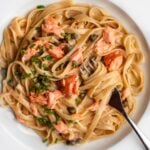
Creamy Salmon Pasta Recipe (easy and delicious)
An insanely delicious salmon pasta with capers and lemon nestled into a light and zingy parmesan cream sauce.
Servings: 2 people
Ingredients
- 200 grams dried pasta (or 300 grams fresh)
- 1 salmon fillet (anywhere between 160 - 200 grams)
- ½ tablespoon olive oil
- 40 grams butter
- ½ - 1 teaspoon black pepper
- 2 - 3 garlic cloves, finely diced
- ⅔ cup pasta water
- ½ cup creme fraiche (or heavy cream, see notes)
- 60 grams parmesan cheese, finely grated
- 1.5 tablespoons lemon juice (plus zest to finish)
- 2 tablespoons capers
- 2 tablespoons fresh herbs, roughly chopped (chives, dill or anything else you like)
- salt to taste
Instructions
- Preheat oven to 390f (200c)
- Place the salmon fillet skin side down on a baking tray lined with parchment paper. Drizzle with ½ tablespoon olive oil and a good pinch of salt and pepper. Squeeze a little lemon juice over too if you have extra.
- Bake the salmon for about 10-12 minutes, depending on the thickness of the fillet (see the notes below for timing by thickness). Start checking thinner fillets around 8 minutes.
- Let it sit loosely covered with foil while you make the sauce then use two forks to break it up into bite size chunks.
- Boil your pasta in well salted boiling water, undercooking by a minute from package instructions and reserving a good cup of the pasta water before draining.
- In a large skillet melt the butter over a medium heat and when it starts to sizzle add the pepper and garlic and cook for a further minute.
- Lower the heat slightly and add ⅔ cup of pasta water and whisk together.
- Add the creme fraiche and whisk until it is well emulsified, let it gently bubble for a minute or so (it should never be boiling, just a VERY gentle simmer).
- Add the finely grated parmesan in two separate lots, mixing in and letting it melt before adding the next.
- Add the lemon juice and whisk in quickly.
- Add the cooked pasta straight into the sauce, toss well and let it gently bubble away to thicken for 1 - 2 minutes. Add more pasta water if you need. Remember it will continue to thicken up off the heat.
- Toss through the capers and then serve with the flaked salmon on top and some lemon zest too. I like to also add some chopped chives, dill or other herb you like.
Video
Notes
Salmon - Use more (a bigger fillet) if you like and feel free to cook it another way such as pan-frying. It should be opaque in the middle and have an internal temp of 145f if you have a meat thermometer.
- I find the perfect timing for a salmon fillet is to measure how thick it is in the fattest part. It needs 5 minutes for every 1.5cm. So if your fillet is 3cm thick then 10 minutes. My piece was actually quite small at 2.5cm so I did 8 minutes and it was perfect. If you don't have a way to measure then do 10 - 12 minutes if it is an average piece.
- You can also use hot smoked salmon for an even easier option. Skip the salmon baking steps, flake it into bite size pieces, and gently fold it through the pasta at the end to warm through. Taste before adding extra salt, as hot smoked salmon can be quite salty.