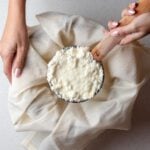
Homemade Ricotta
A simple, foolproof method for creamy homemade ricotta made with milk and acid. Fresh, rich, and far better than store-bought, it’s perfect for pasta fillings, ravioli, or whipping smooth.
Servings: 6 people (1.5 - 2 cups)
Equipment
- 1 large heavy bottomed pot
- Cheesecloth
- Strainer or colander
- Large bowl
- Thermometer (optional but recommended)
Ingredients
- 2 litres whole milk (about 8 cups)
- 45 ml white vinegar (or lemon juice) (3 tablespoons)
- 1 teaspoon salt Optional, but recommended for flavor
- ½ cup cream Optional, for a richer, creamier ricotta
Instructions
- Line a colander with cheesecloth (I do two layers) and set it over a large bowl to catch the whey. Set aside.
- Pour the milk (and cream, if using) into a large, heavy-bottomed pot. Add the salt and gently heat over medium-low heat until the milk reaches 185°F (85°C). It will take about 20 minutes.
- If you don't have a thermometer (I do highly recommend getting one), it should be steaming with small bubbles around the edges, it will be close to a simmer but not bubbling.
- Drizzle the vinegar (or lemon juice) evenly over the surface of the milk. Give it one or two gentle stirs only to distribute the acid, then immediately turn off the heat.
- Leave the milk undisturbed for 5–10 minutes while the curds separate from the whey.
- Use a slotted spoon or spider strainer to gently lift the curds into the lined colander. Avoid pouring the pot, as this can break up the curds and cause a mess.
- Let the ricotta drain until it reaches your desired texture. See notes below on times. Make sure the ricotta isn't resting in the whey collecting in the bowl. After a few minutes I just sit the colander in my sink.
- Transfer the ricotta to a bowl. Use straight away or refrigerate in an airtight container for up to 3–4 days. The ricotta will firm up slightly as it chills.
- See the video below!
Video
Notes
Milk matters - Use whole milk for the creamiest ricotta. Avoid UHT or ultra-pasteurized milk, as it doesn’t curdle as reliably.
Lemon juice vs vinegar - Both lemon juice and white vinegar work to curdle the milk. Vinegar is more consistent, as lemons vary in acidity, while lemon juice adds a light citrus note.
Optional cream - Adding cream makes the ricotta richer and slightly thicker, but it’s completely optional.
Temperature is key - Heat the milk gently to around 185°F (85°C). If the milk boils, the curds can become firm or grainy.
Don’t over-stir - After adding the acid, stir once or twice to distribute it, then leave the milk undisturbed so the curds can form properly.
Drain based on how you’ll use it:
- 10–15 minutes for soft, spreadable ricotta
- 30 minutes for a classic texture
- 45–60 minutes for a firm ricotta ideal for ravioli or gnocchi